SERA+ Parental Control Platform
Empowering parents to create safer and healthier digital experiences for their children.
Timeline
2025
Role
Team
Cross-functional team of PMs, BAs, and Developers
Tools
Figma, Miro, Notion, Jira
Problem
The challenge.
Parents often struggle to understand and manage their children's digital habits across multiple devices. Existing solutions can be overwhelming, making it difficult to monitor activity, enforce screen-time limits, and quickly identify potential risks. As children's digital engagement continues to grow, parents need a simple and reliable way to stay informed and maintain a healthy balance between safety and independence.
Solution
What I delivered.
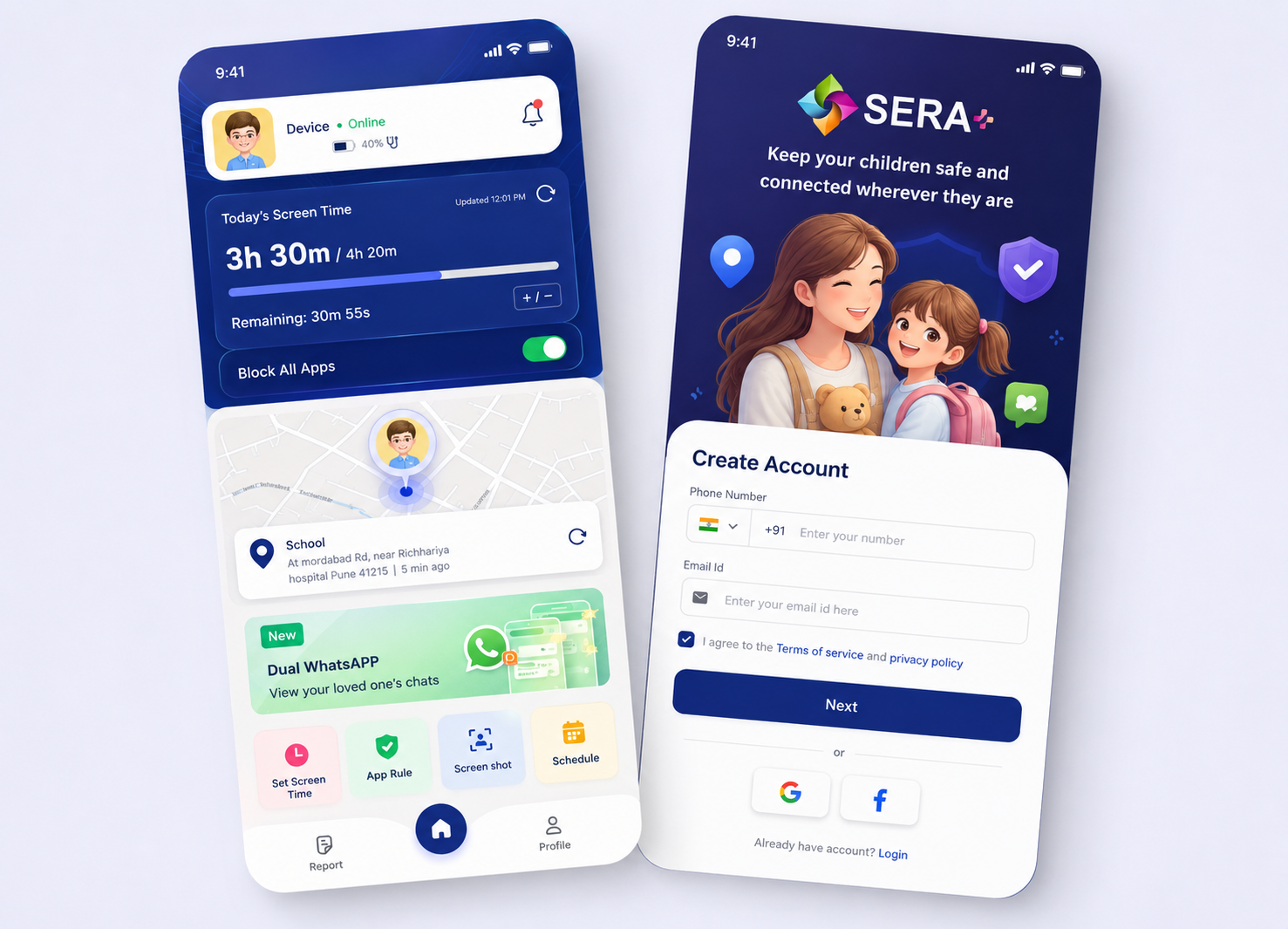
Designed a centralized parental control experience that enables parents to monitor device activity, manage screen-time usage, receive important alerts, and access actionable insights through an intuitive mobile interface. The platform simplifies digital supervision while promoting responsible technology use.
Process
How I worked through it.
Research & Discovery
Collaborated with stakeholders to understand business requirements, user challenges, and key objectives for the parental control platform. Reviewed existing workflows and identified opportunities to improve usability, visibility, and overall user experience.
Define & Align
Defined product requirements, prioritized core features, and aligned design decisions with business goals. Focus areas included activity monitoring, screen-time management, notifications, and parent-friendly controls.
Design & Prototype
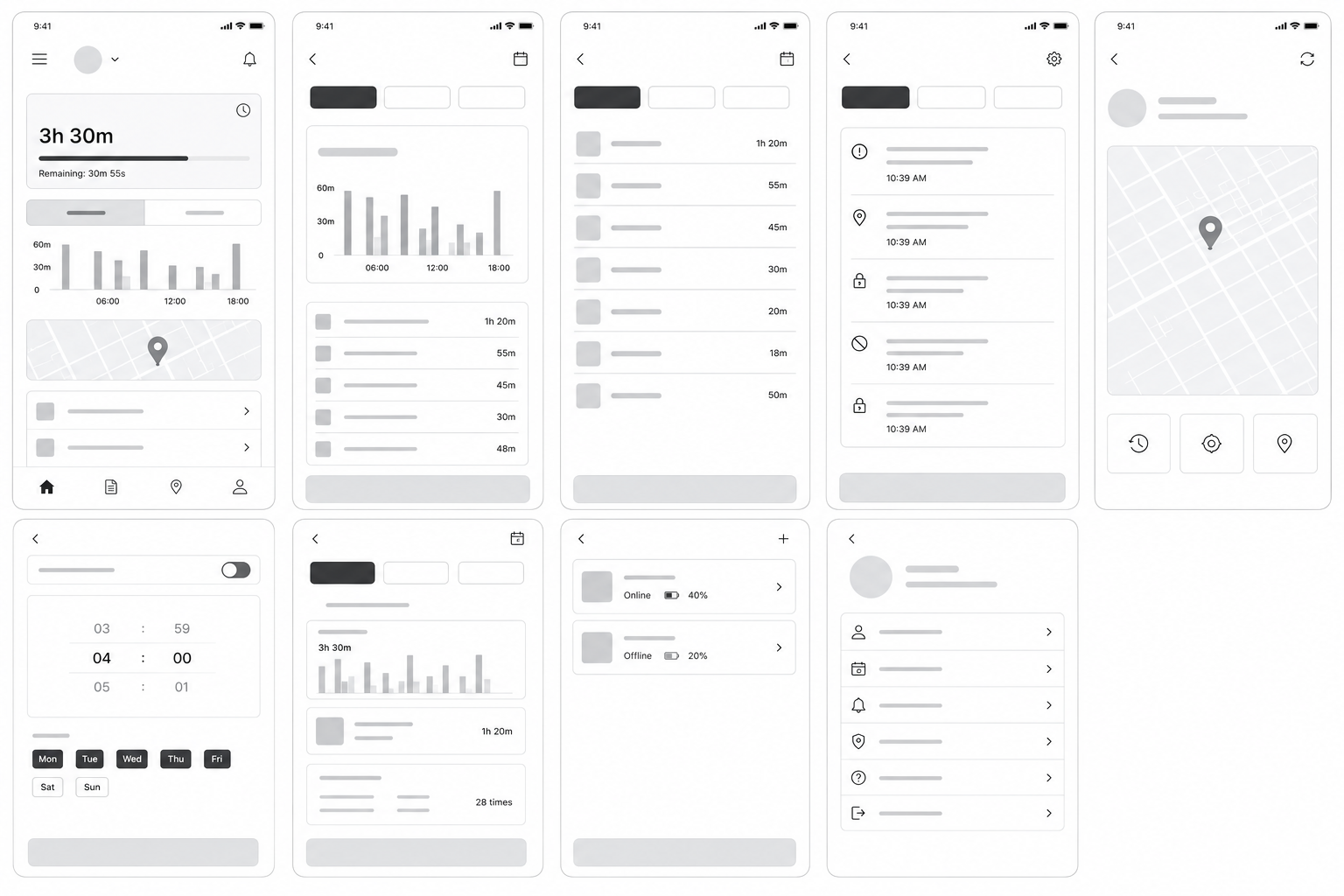
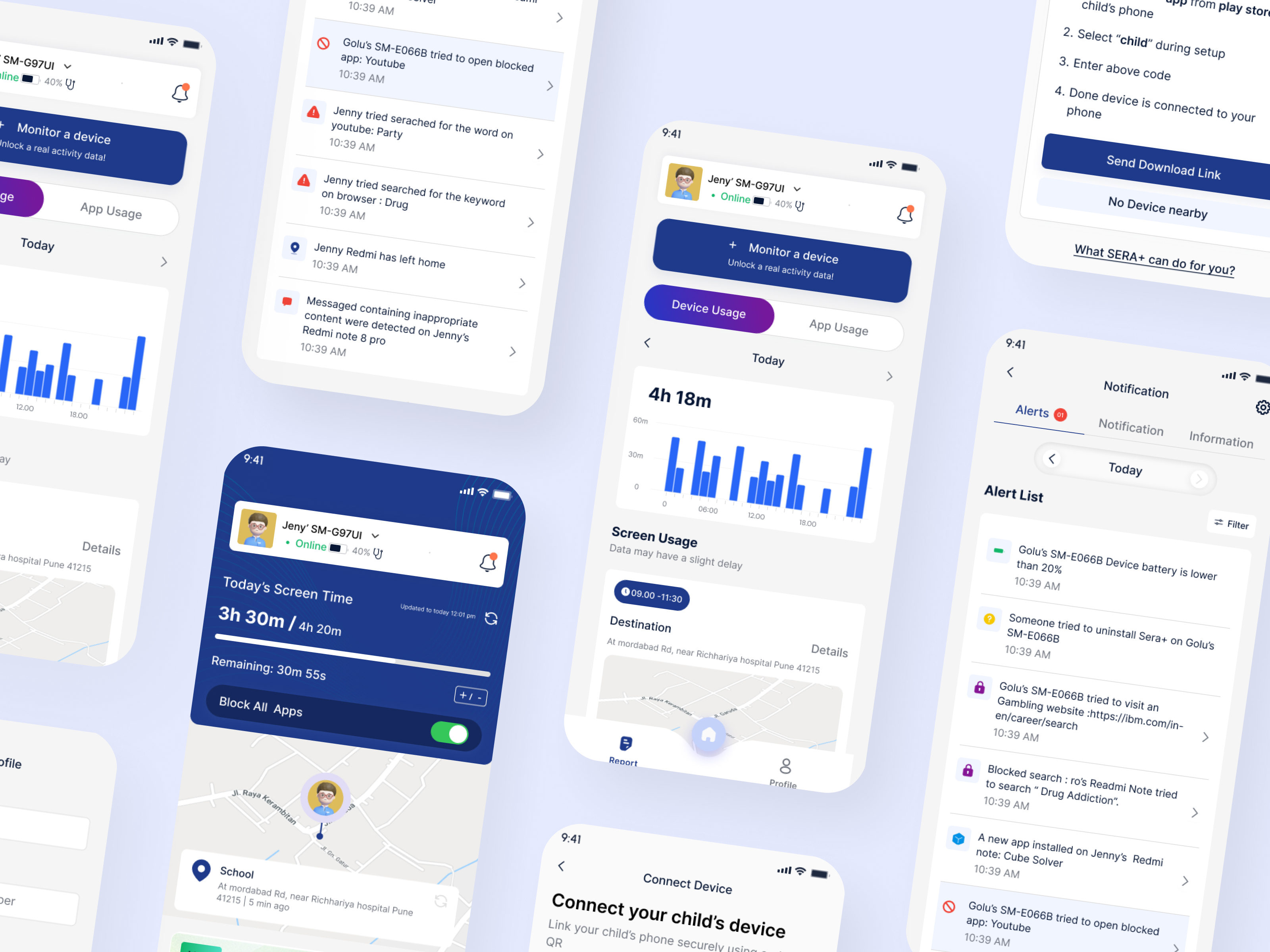
Created low-fidelity wireframes to explore layouts, navigation patterns, and feature organization. These concepts were refined into high-fidelity mobile designs that focused on clarity, accessibility, and ease of use for parents managing their children's digital activities.
Iterate & Ship
Refined designs through stakeholder feedback and review sessions, improving usability and visual consistency. Final designs were prepared for development with detailed specifications and assets to support implementation.
Reflection & Learnings
Looking back.
This project strengthened my ability to design intuitive mobile experiences within real world constraints. Working from business requirements and stakeholder feedback, I learned how to simplify complex features, improve usability through iterative design, and create interfaces that balance functionality with ease of use.
Next case study
Ntangu Crowdfunding Platform